RALUMO · RTVE
High-speed train collision in Toledo: over 40 dead, human error hypothesized
A serious railway accident occurred this Wednesday in Urda, Toledo, Spain, where a Renfe AVE train rear-ended a stationary Iryo convoy. The provisional toll, according to RTVE, speaks of over 40 victims and numerous injured. Initial investigations suggest a possible human error, aggravated by a malfunction of the LZB protection system.
Tools
A serious railway accident struck Urda, Toledo, Spain this Wednesday. At 8:54 AM, a Renfe AVE train, with 397 passengers, rear-ended a stationary Iryo convoy carrying 147 people. RTVE reported over 40 dead and numerous injured. High-speed traffic between Madrid and Andalusia has been interrupted.
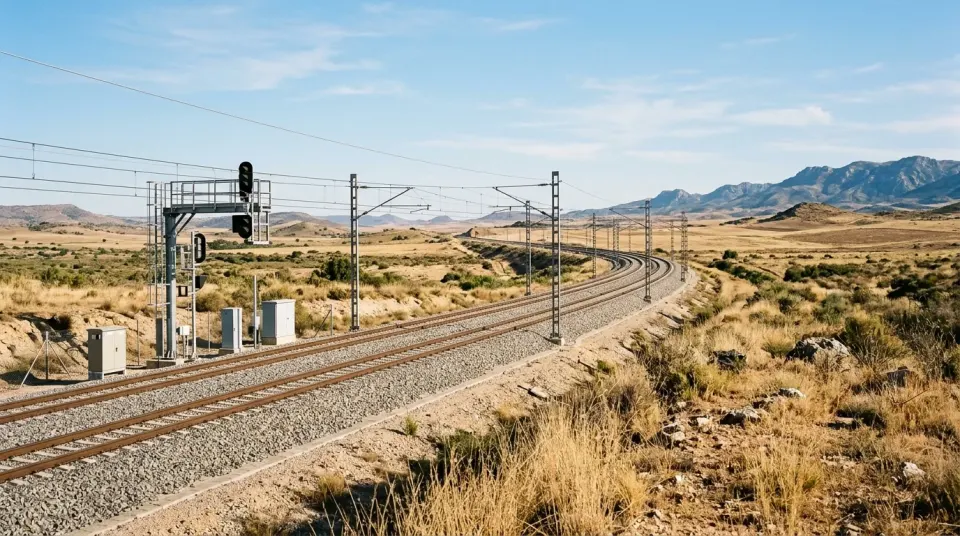
Initial hypotheses, according to RTVE, suggest human error. Adif reported that BSL, an alternative system, was operating due to a malfunction of the main LZB system. BSL detects trains, but without continuous supervision of speed or distance. The driver guides based on on-board signals, with ASFA as an intermittent backup.
José María Goicolea, from the Association of Civil Engineers, hypothesizes “human failure” due to the LZB malfunction. This system, in place since 1992 on the Madrid-Seville line, automatically prevents rear-end collisions. He suggests an LZB malfunction and the sole use of ASFA, but he defines these statements as “speculations” yet to be officially confirmed.
Óscar Carballo, from the College of Public Works Engineers, calls for caution. He described a rear-end collision as “strange”, given that railway signaling and organization should prevent it. Protection systems, through 'cantons', should detect trains and activate automatic braking, ensuring safe distances and preventing collisions if functional.
Sources and references
RTVE · Updated: 28.10.2026 12:10 (Europe/Rome). Open official source ↗