RALUMO · Euronews
Germany begins tests with kamikaze drones and artificial intelligence in Lithuania
The German armed forces have begun testing loitering munitions and targeting systems based on artificial intelligence in Lithuania. The maneuvers are part of the multinational NATO exercise named Freedom Shield, held at the Rūdninkai military training area, near the Belarusian border, to strengthen the alliance's defensive capabilities.
Tools
The German armed forces, the Bundeswehr, have begun experimenting with kamikaze drones and artificial intelligence-assisted targeting technologies during field exercises in Lithuania. As reported by the broadcaster Euronews, the trials are taking place in the Rūdninkai military training area, located near the border with Belarus, and aim to modernize national defensive equipment.
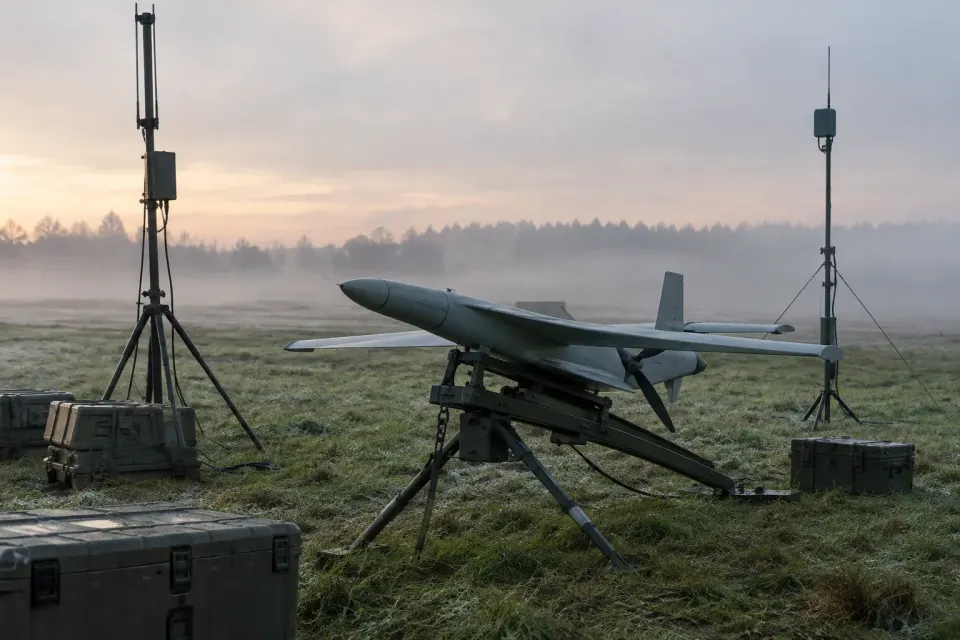
The activities involve loitering munitions designed by the German technology companies Helsing and Stark Defence to strike armored vehicles. The deployment of the aircraft takes place within the framework of the multinational exercise Freedom Shield, which brings together approximately 3,800 military personnel from eight North Atlantic Treaty Organization countries. In the simulated launches, inert warheads were used to evaluate trajectories without causing real detonations.
The military also tested Clarity, an intelligence software developed by Helsing to process data from multiple sensors and accelerate target identification. This solution aims to facilitate commanders' decisions by reducing traditional bureaucratic steps, although the armed forces highlight that the battlefield effectiveness of these systems may prove to be inferior compared to demonstration recordings.
The tests are part of the plan to strengthen NATO's eastern flank, where Berlin intends to make the permanent brigade Panzerbrigade 45, composed of approximately 5,000 personnel, fully operational by 2027. Lithuania occupies a strategic position between Belarus and the Russian exclave of Kaliningrad, in a context of constant attention to the regional security balance.
Sources and references
Euronews ↗ · Source date